
Search in progress...
mai 2026
A precious stroll through the verdant emerald gardens
Beryl’s luminous green has been a source of envy since the dawn of time. The first traces of this variety of beryl date back to the 2nd millennium BC. The Babylonians used emeralds as currency. Later, in ancient Egypt, its beauty and rarity seduced the powerful and the pharaohs, who adorned their jewels with these natural gems extracted from the deepest bowels of the earth, in the vicinity of the Red Sea.
Since then, emeralds have never ceased to exert their power of fascination in every corner of the globe. While the most sought-after emeralds come from Colombia, notably from the two best-known mines, Muzo and Chivor, discovered by the Spanish in the 16th century, other countries have important emerald mines. Highly reputed, Afghan emeralds rival those from Colombia, Pakistan, Madagascar, Russia and southern Africa.
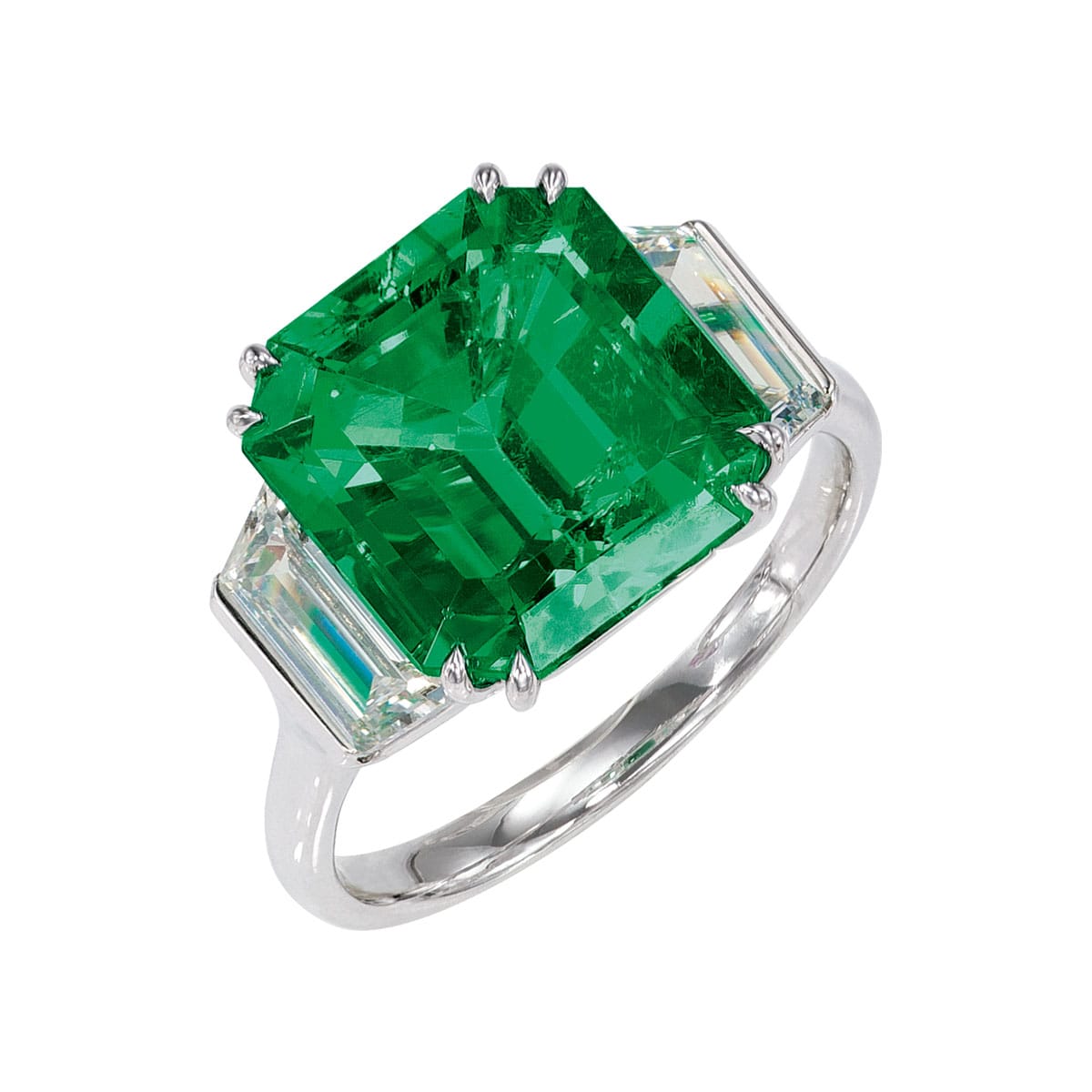
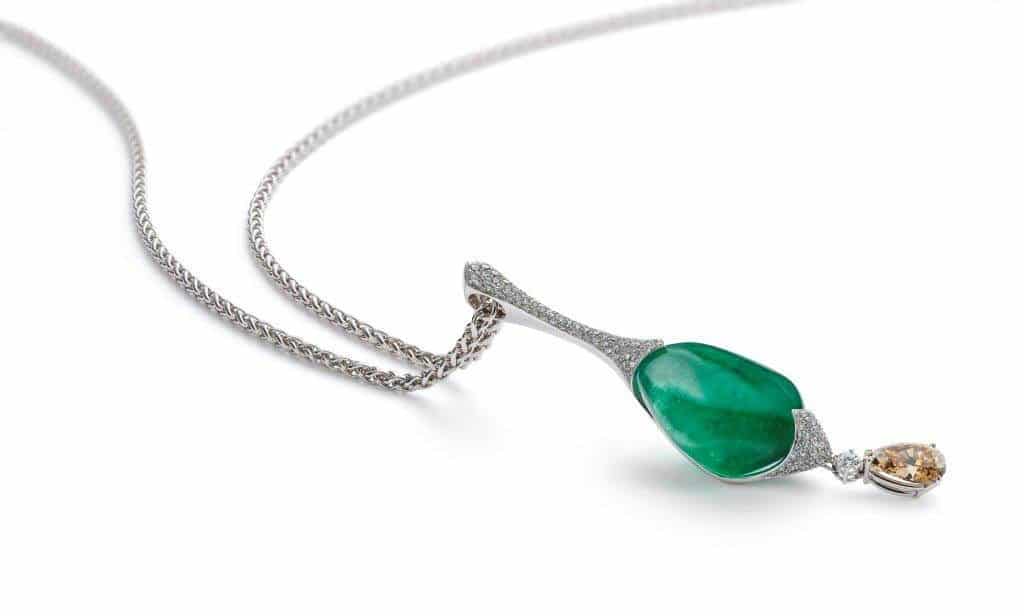
More information about this Lionel Meylan Créations ring here
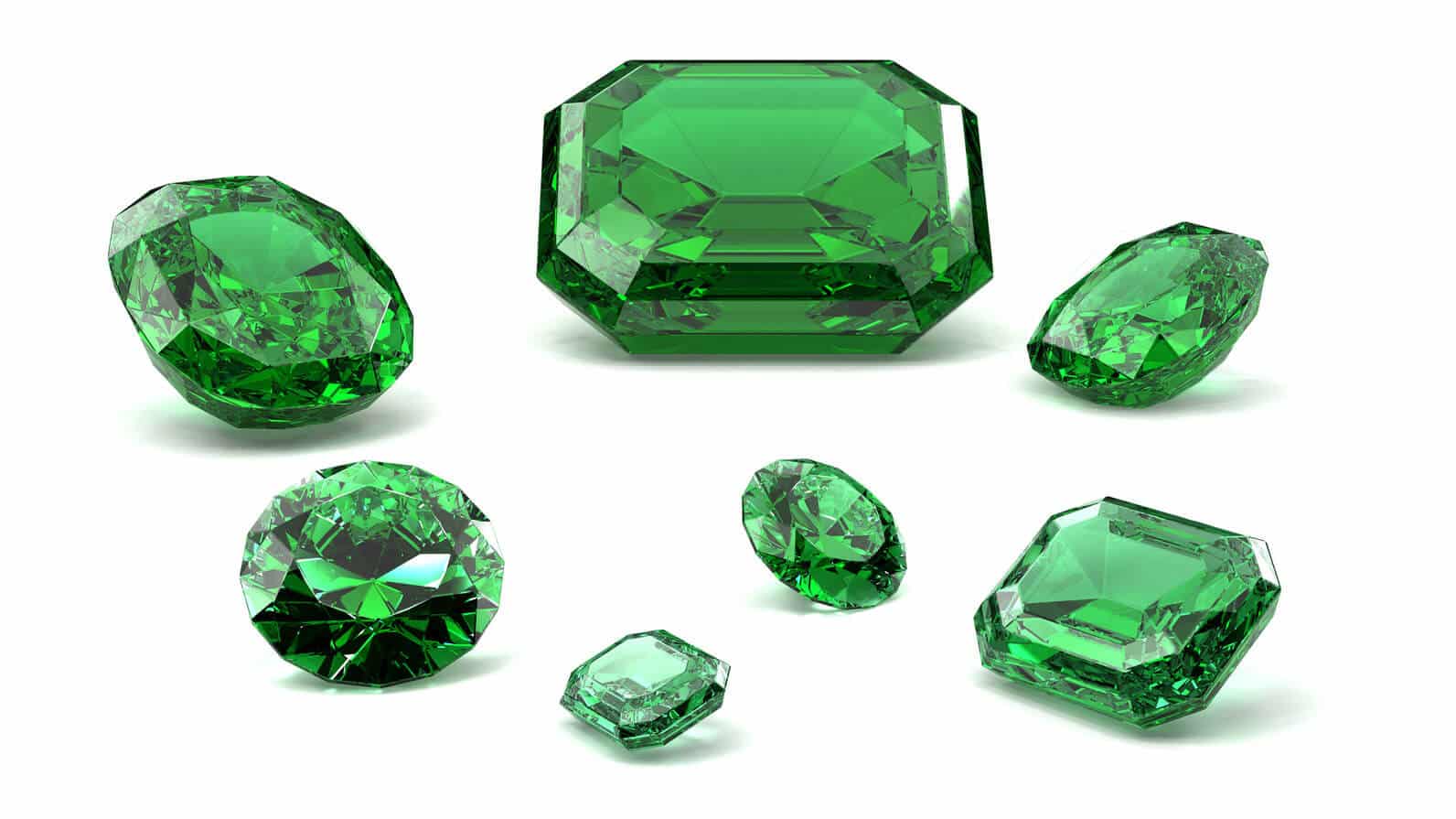
Emerald’s hardness – 7.5-8 on the Mohs scale – and color allow it to be cut in all shapes and sizes. Cabochon, pear or oval, it can enhance an ensemble or be set in a ring. But the optimal cut is certainly the one that bears its name: the famous emerald cut, whose perpendicular facets multiply the viewing angles of its subtle reflections. In this way, the eye can plunge into the marvellous light of its enchanting gardens.
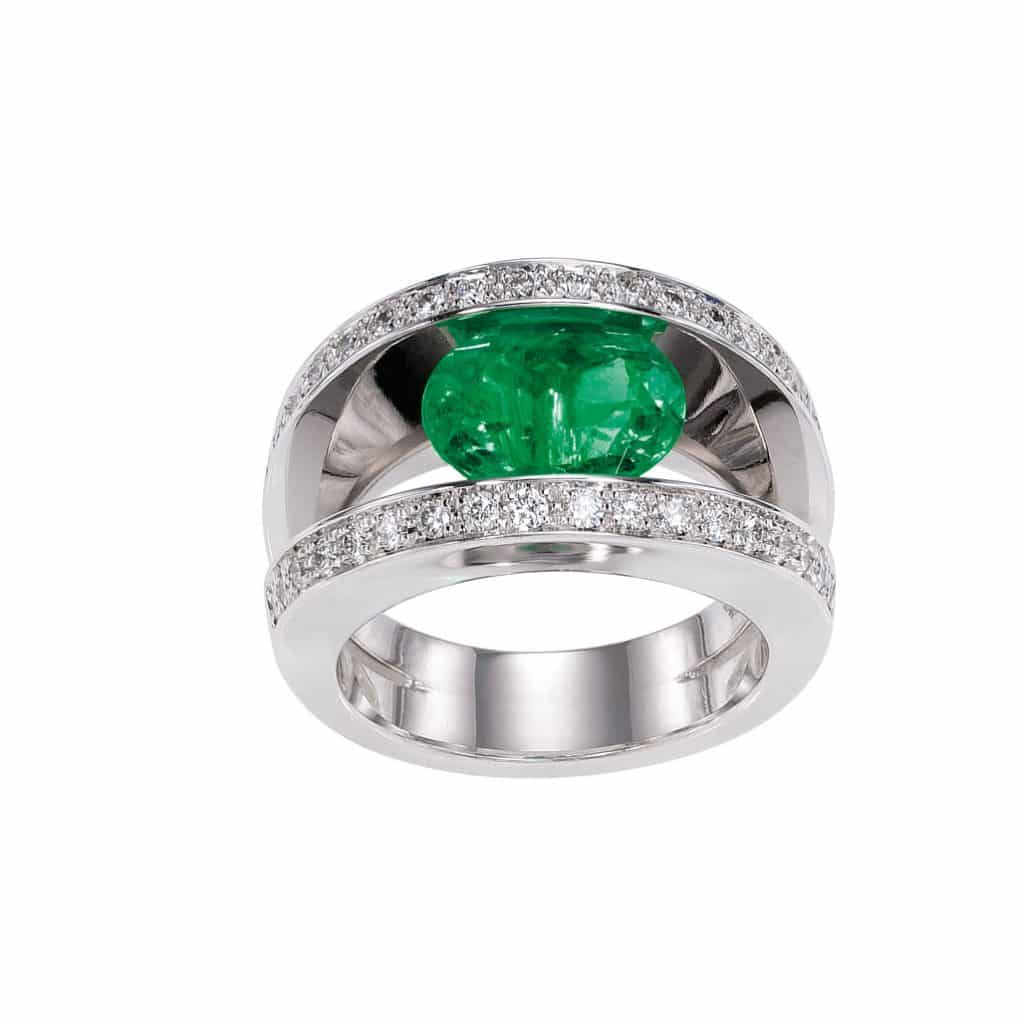
Discover all Lionel Meylan Créations jewels here
Emerald glossary by Florence Agier

Jardins Evocative of poetry, garden is a flowery word for an inclusion that occurs naturally and systematically
in emerald.
Trapiche An emerald is said to be trapiche when it has star-shaped carbonaceous inclusions, similar to a central black core nestled inside the stone and extended by six rays. This highly prized gem is found in South America.
Great Mogul emerald Among the best-known emeralds, the Great Mogul emerald was discovered in India in 1695. This impressive 218-carat stone features religious inscriptions and engraved floral ornaments.
Smaragdus The name emerald comes from the Latin etymology Smaragdus, which literally means “heart of stone”. But considering that emerald is the stone that celebrates 40 years of marriage, why not call it a “heart stone” instead?