Search in progress...
mai 2026
“A watch must be authentic, identifiable and recognizable”.

*Watchmaking, its history, its culture and its techniques hold no secrets for this watchmaker by training, well-versed in marketing and communication techniques. A passion and knowledge that he shares through his training courses and consulting work with leading watch brands.
How has watch design evolved over the last 40 years?
In the 1970s, we moved from a functional, mostly round design to a creative one with angles and shapes. Generally speaking, over the last 40 years, more and more complications have been incorporated into watches. From the 90s onwards, watches became thicker, larger and more ostentatious. From a standard diameter of 38mm, we’ve gone up to over 42, even 44mm, with some daring the 46 or 56 in the most extreme cases! Interestingly, today the trend is reversed. Brands are coming to their senses with more elegant watches.
What’s the big design trend right now?
Without hesitation, a return to vintage! Watches are smaller, with less volume. They have all the identifying codes of the watches of yesteryear, but benefit from new materials and the latest technologies. There’s even a resurgence of the extra-flat watch, a symbol of masculine elegance in the 60s and 70s. Jaeger-LeCoultre’s Master Ultra Thin is a good example. But new players are venturing into the extra-flat arena, such as Bulgari, with the recent exploits of the Octo Finissimo.

Why is watch design so specific?
Just as in the automobile there is the bodywork element and the engine element to be combined, the two must merge into a single object, easily portable, legible, and if possible also comfortable. A watch has to be identifiable and recognizable. At the same time, it must satisfy the constraints of long-term resistance and reliability. In this respect, the choice of materials has a major influence on design. The philosophical question remains: should form follow technology, or the opposite?
How can a watch’s complications influence its aesthetics?
Movement development is far more complex than design, and in the end, the movement often takes precedence. For example, if I want to move a hand by two millimeters on a dial, this requires a new movement architecture whose technical changes will be very heavy and costly. Or even the construction of a new caliber, which will take between three and five years to complete. Take a Breguet watch, for example. To move the tourbillon cage to 4 o’clock on the Classique Tourbillon model, the movement had to be completely redesigned.

You speak of legibility and solidity. What about comfort?
It’s an essential element. To choose a watch, you have to wear it, caress it. You have to admire it by touching it. You also need to pay attention to legibility, the shape of the hands and the contrasts of the dial. The weight and balance of the watch, as well as the materials used, are also important, as are the finishes of the case: polished, with softened angles, satin-finished… That said, you may buy a watch that’s not at all comfortable just because you think it’s beautiful. Like a woman who likes to wear a pair of high-heeled shoes, or a man with a tie that clamps around his neck. But, in the end, it’s love at first sight that decides.
Why should two
watches of equivalent diameters seem totally out of proportion?
Some shapes influence the eye differently. Contrasts, too, play a major role in our perception. Take two dials, one black and one white: with identical diameters, they always give a different impression. Lugs are also important. Straight, sloping, rounded or polished, they play a huge role in the way we perceive a watch. IWC’s Portugaise has evolved significantly in this respect, with lugs that make it much more comfortable to wear.
What is successful design?
Design is successful as soon as it speaks to us, as soon as it evokes a style or utility. The more it is recognized and established in the market, the more it is defined as “iconic” or downright legendary. It’s difficult to describe with rational criteria. It’s all extremely subjective. But a watch is best appreciated by “reading” it carefully, a bit like a book… The more you admire it, the more you discover other elements or aspects that may seduce you. And let’s not forget: a watch speaks to us by telling the time… but at the same time, it speaks a little about us! It’s up to you to choose your own style.
Which iconic models have caught your eye?
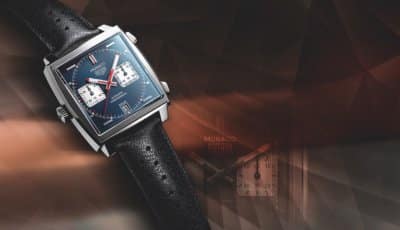
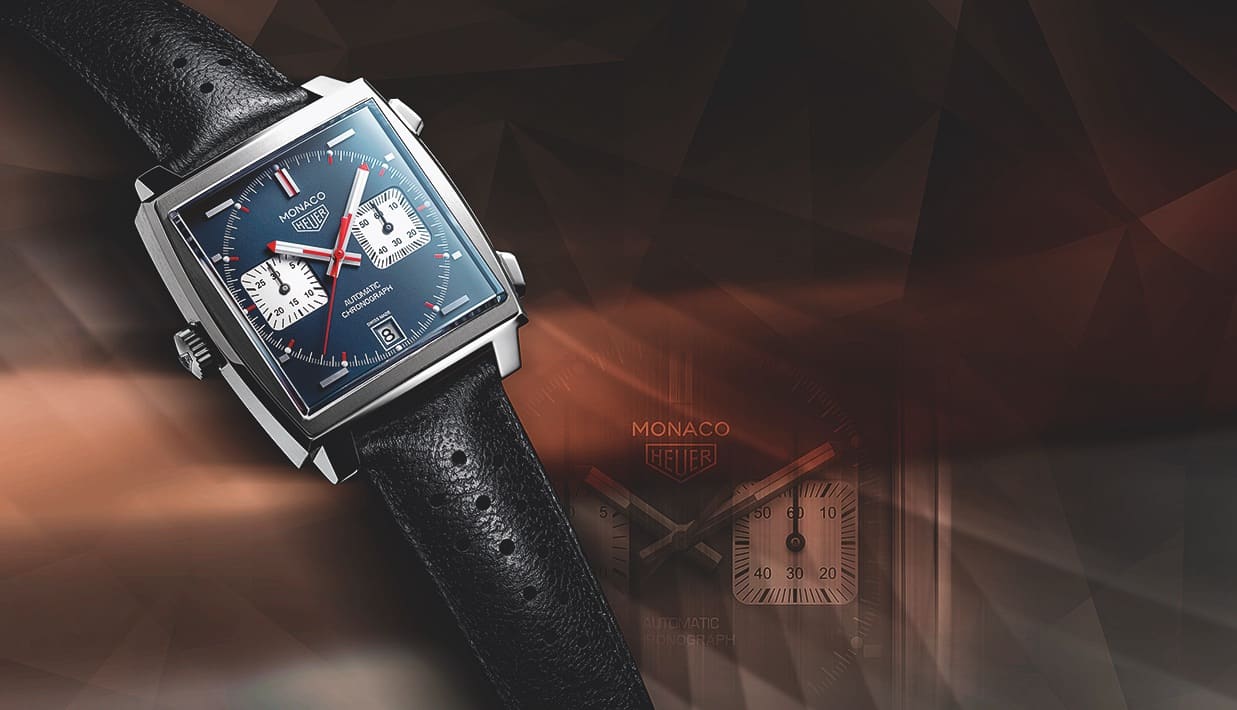
First of all, the Rolex Submariner. It features authentic developments with its highly legible bezel and dial designed for professionals. It reminds me of my freediving days! Omega’s Speedmaster, of course, with its aesthetic coherence. Even after 60 years, it still evokes the first step on the Moon. I also love square watches. TAG Heuer’s Monaco, launched in the 1950s, is an excellent example. And, symbolically, it was the world’s first water-resistant automatic chronograph.