

Search in progress...
mai 2026
Automatic movements: infinite mechanics
No batteries, no wires or plugs, and even less need to find an outlet so that it can tell you the time without interruption. In this digital age, where smartphones, laptops and tablets have taken over, doing without electrical power is a blatant anachronism. Yet that’s the charm of the automatic watch, which needs nothing more than wrist movements to power the energy reserve needed to activate its hands. How does it work? Thanks to an oscillating weight placed, in most cases, on the reverse side of the mechanical caliber, each movement is converted into energy stored in the barrel spring. A transmission system then transfers the energy to the escapement, which doses it evenly to ensure the watch runs smoothly.
Today, many mechanical watches are powered by automatic calibers with two or three hands. In more sophisticated versions, they can also be found at the heart of perpetual calendars or chronographs. Yet few brands are capable of producing them from A to Z. A few large manufactures concentrate all the production stages of their calibers under one roof, from R&D to production, including component decoration, assembly and escapement adjustment. This independence allows a degree of creative freedom in the face of the technical constraints imposed by the development of an automatic caliber. It also guarantees the excellence and precision of the watch for generations to come.
Lexicon
ROTOR
Also known as the oscillating weight, it rotates 360° according to the wearer’s movements. Generally cut in the shape of a semicircle and placed on the back of the caliber, it powers the energy reserve.
BARREL SPRING
When tensioned, this mainspring stores energy. When released, it delivers it to the movement, ensuring the smooth operation of mechanical functions.
EXHAUST
Composed of the escapement wheel and the anchor, this mechanism distributes energy to the balance wheel, which is the watch’s regulating organ.
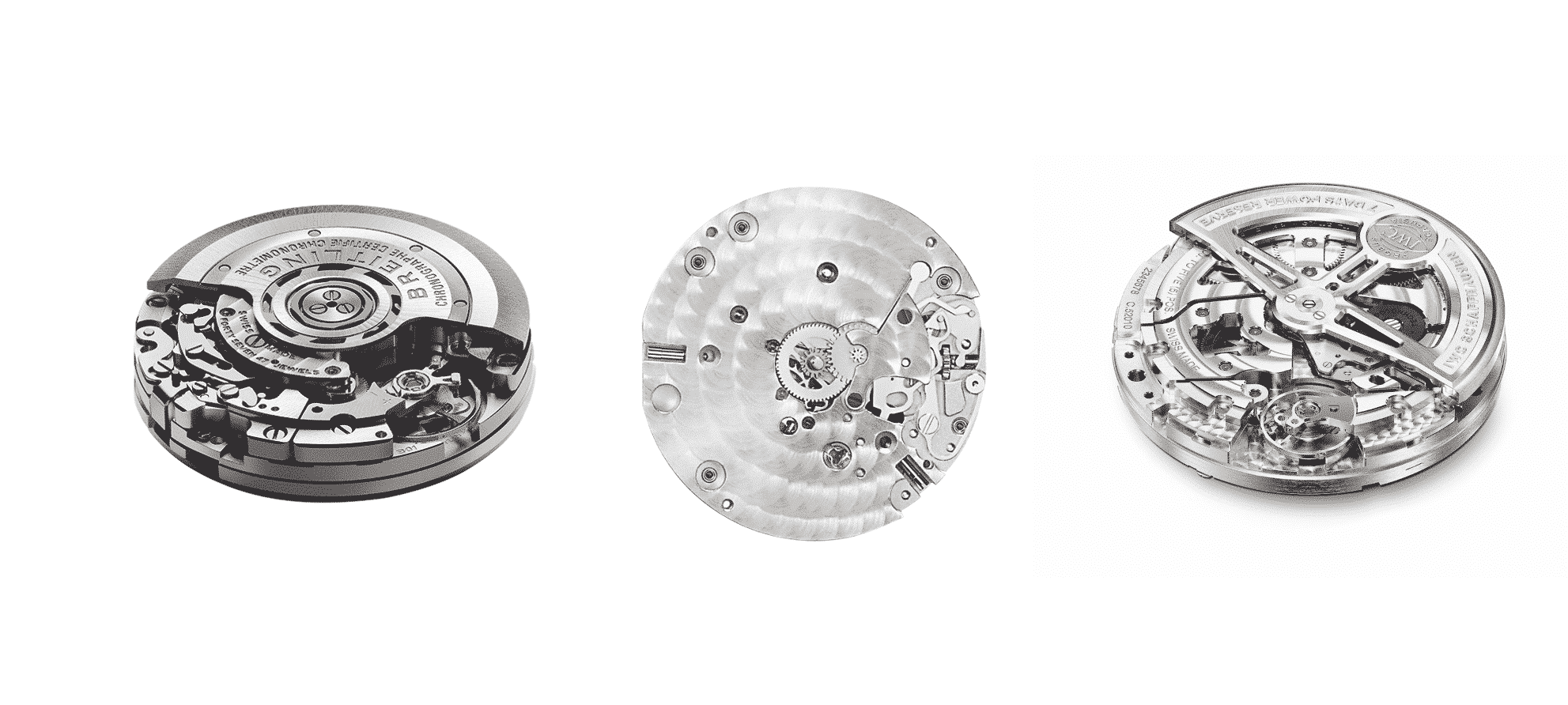
Three movements, three interpretations
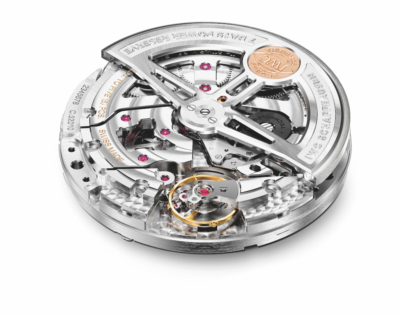
IWC
PORTUGIESER AUTOMATIC
To measure time, this timepiece relies on the self-winding Manufacture Calibre 52010 which, in addition to hours, minutes and seconds, displays the date and seven-day power reserve.
Its little plus
“Thanks to its diameter, the oscillating weight offers excellent inertia. And, thanks to the special design of the patented Pellaton system, energy loss is avoided and winding efficiency is improved.”
JAEGER-LECOULTRE
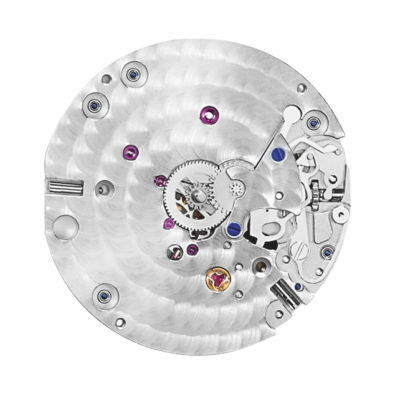
REVERSO CLASSIC MEDIUM DUETTO
Jaeger-LeCoultre’s Duetto model is powered by the Manufacture Calibre 968A. On the front, it displays the hours and minutes on a grey dial. On the reverse side, the display is identical, but the black dial opens onto the black rotor disk. A very watchmaking detail.
Its little plus
“The advantage here is primarily aesthetic. The design of an automatic movement requires a certain thickness. So does the design of a reversible watch. To maintain a slim, elegant silhouette, the Manufacture has opened up the dial on the reverse side of the watch to integrate the oscillating weight. A very successful animation!
BREITLING
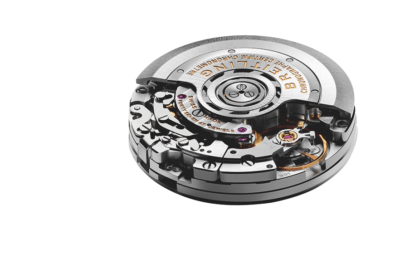
CHRONOMAT
In the watch industry, this chronograph caliber is known as the white wolf. Developed by the Manufacture in 2009, the COSC-certified Calibre B01 features a column wheel, a vertical clutch and a power reserve of over 70 hours. The result is a more regular movement, particularly for this Chronomat model.
Its little plus
“Because of its design, it’s a very robust movement, which is essential for a sports watch like the Chronomat. What’s more, it features an inverter to allow the oscillating weight to wind the barrel, regardless of the direction in which it turns.”