Search in progress...
mai 2026
Discreet Vevey
Lionel Meylan is particularly attached to this city, which he says “has a soul”. Its history holds no secrets for him. He evokes it with a broad smile that, better than words, says how strong the bond is. As chance would have it, he set up one of his two stores in a historic part of the town, in the very first house in Vevey to be built outside the city walls. Remains of the 13th-century ramparts, which were demolished in the 19th century, can be seen in the store of this building, which dates from around 1600-1660. It’s a curious coincidence that a man committed to understanding the workings of time meets the remains of a bygone era.
La Grenette
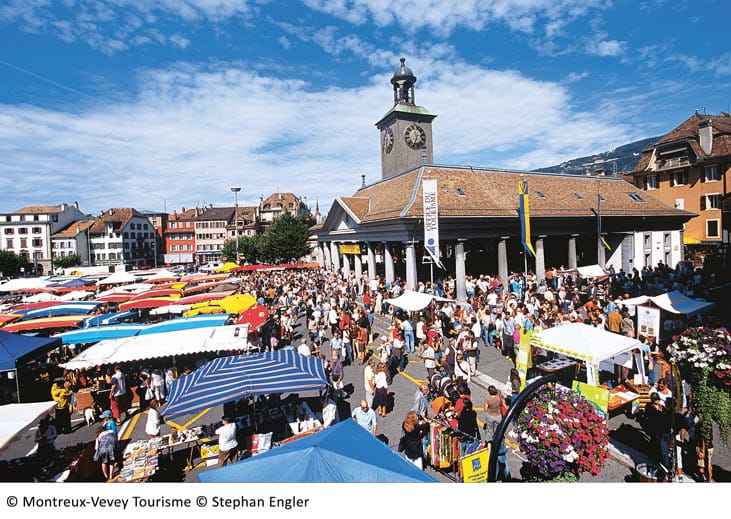
Facing Lake Geneva, in the background of the Place du Marché, the Grenette was built in 1801 to plans by architect Jean-Abraham Fraisse. Long used as a granary, the hall’s classical style, defined by Tuscan columns in black marble, is striking. Today, the building has become a Vevey landmark, housing the tourist office. On Saturdays in July and August, passers-by can stop in the shade of the Grenette to taste wines and local produce offered by local winegrowers.
Market Square
It’s also known as Grande Place. And with good reason! With some 10,000 m2 lined with opulent houses, it is one of the largest squares in Europe. It’s surprising that a town the size of Vevey should have such an open space overlooking Lake Geneva at its center. At a time when the transport of goods by river was still at the heart of economic activity, the layout of the Place du Marché facilitated trade. From the past, the square retains its astonishing openness to the lake, with a breathtaking view of the Chablais region.
Le Château de l’Aile
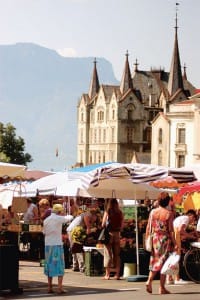
With its feet in the water, at the corner of the Place du Marché and the quays, the Château de l’Aile is an emblematic monument of Vevey’s rich heritage. Its history is astonishing. The building as we know it today dates back to 1840-1846. Built on the ruins of a 17th-century château, itself erected on the site of the town’s former covered market, Château de l’Aile was radically transformed by banker Jacques-Edouard Couvreu. To accommodate his wife, Mathilde Micheli, from Geneva, he transformed it into a small neo-Gothic palace, with rich facades decorated with molasse sculptures and, inside, superbly decorated with painted ceilings and marquetry. Purchased by the city in 1988 as part of an abortive renovation project for lack of sufficient funds, Château de l’Aile was sold to German industrialist Bernd Grohe in 2007, who undertook extensive work to transform it into a luxury residence. Seven years and some 25 million francs later, hopefully by the end of 1014, the people of Vevey will once again be able to enjoy the splendors of the Château de l’Aile.
The Alimentarium
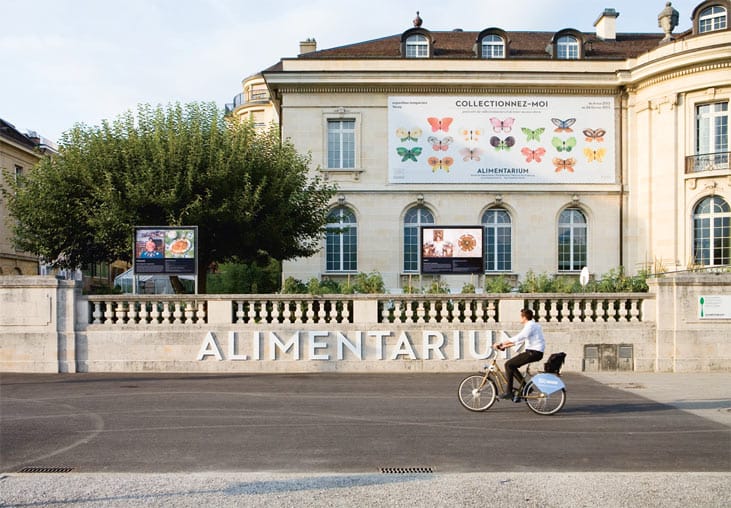
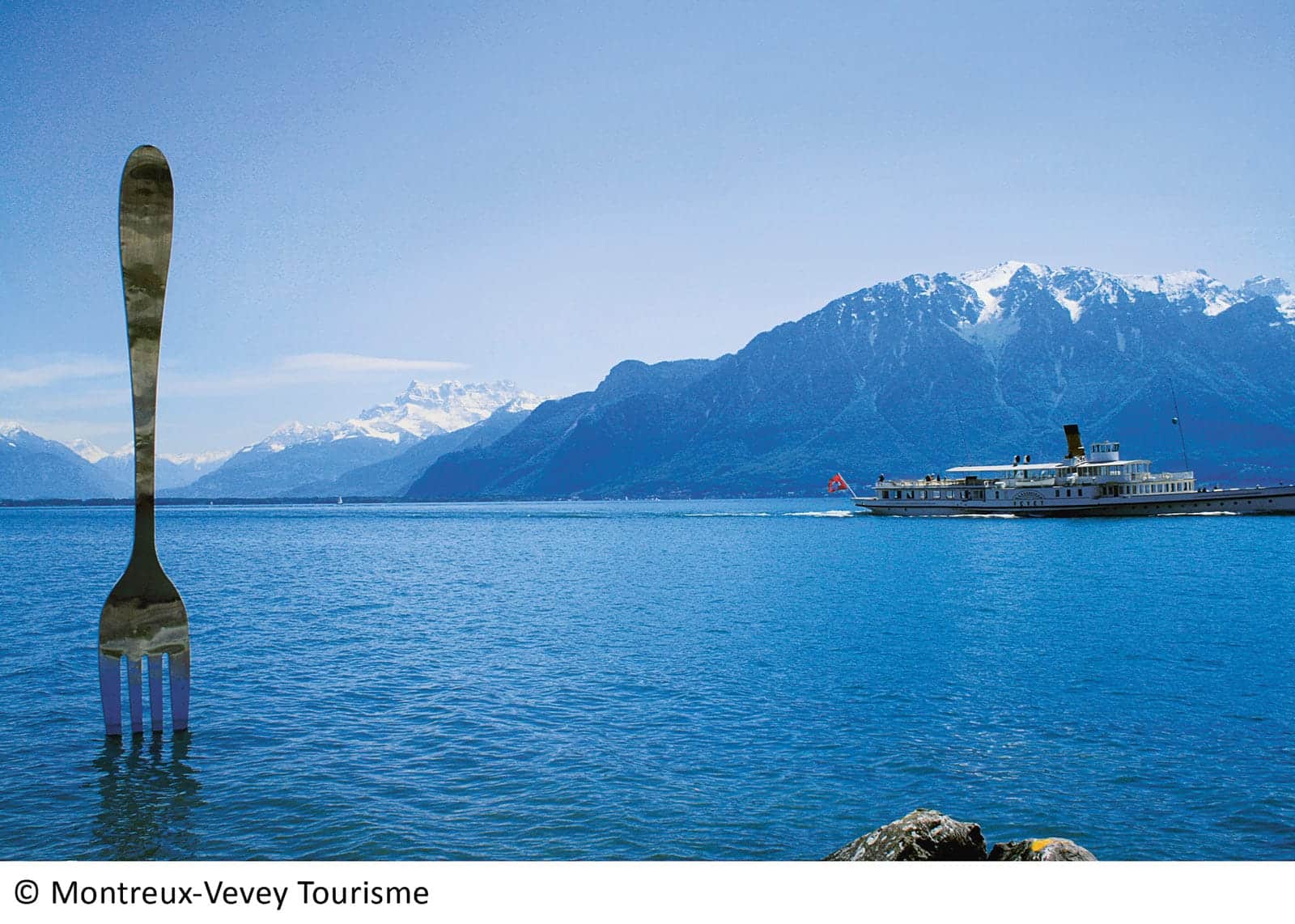
Built between 1916 and 1920, Nestlé’s first administrative headquarters were designed by Vevey architect Adolphe Burnat. Since June 1985, this neoclassical building, just a stone’s throw from the lake, has been home to the Alimentarium, the world’s first museum dedicated to food. In addition to its cultural role, it bears witness to the important economic and social role played in the region by the giant Nestlé.