Search in progress...
mai 2026
ORFÈVE Chocolate manufacturer, from bean to bar
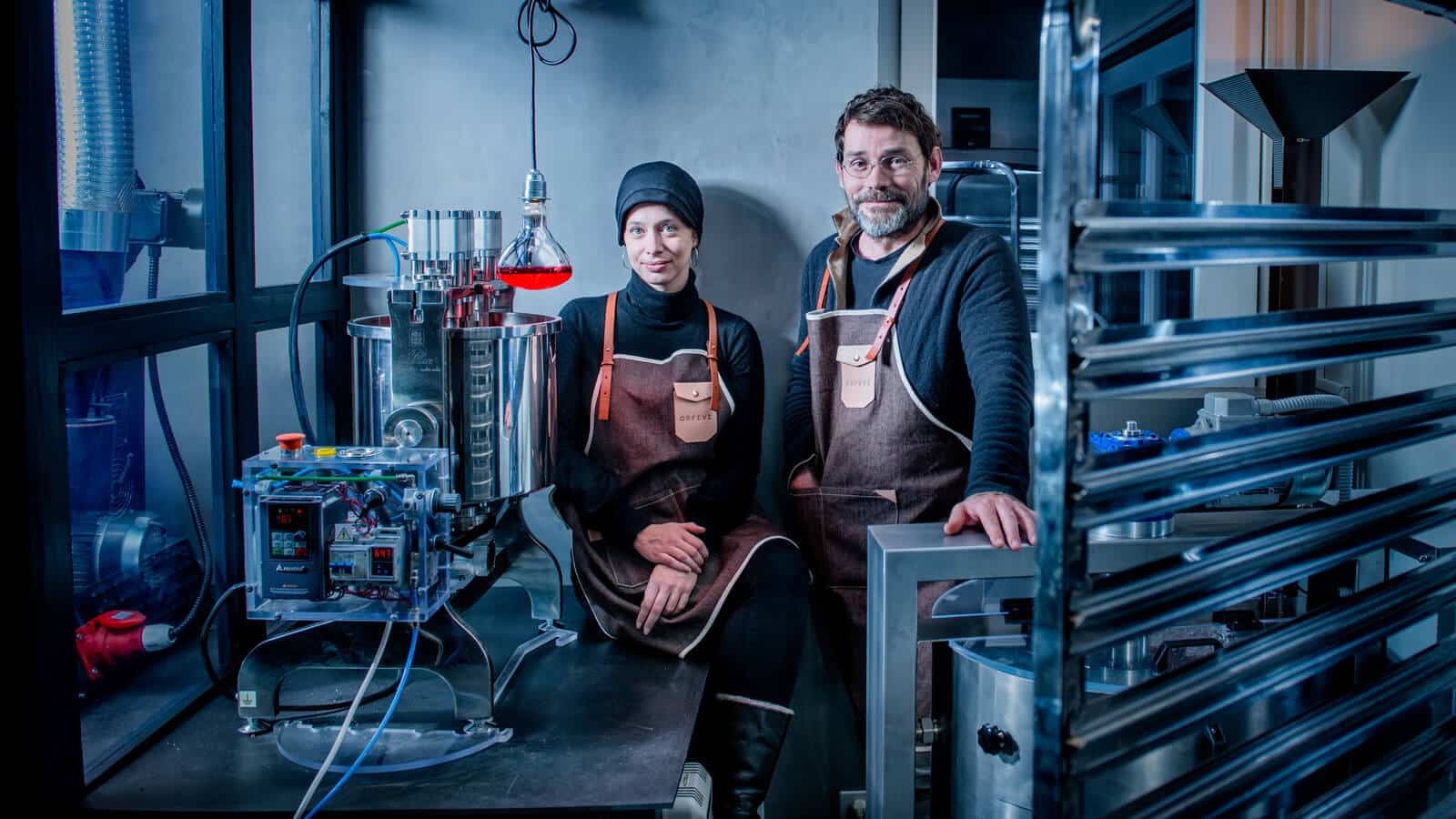
Just this morning, François-Xavier Mousin filled in the pages of a notebook in which he scrupulously records all roasting times. Ever since he created Orfève with his partner Caroline Buechler, he has been tasting, comparing, taking daily measurements and making calculations which he records, like a meticulous laboratory technician, to keep track of the ideal recipe. The success of an exceptional chocolate leaves little to chance. It’s the fruit of know-how that can’t be taught, but is acquired through patience and hard work. From the bean to the plate, Orfève is committed to reviving the secrets of fine chocolate making.
With a passion for the terroir and respect for the principles of sustainable development. The Orfève adventure began in 2016 when François-Xavier Mousin and Caroline Buechler decided to leave everything behind to change their lives. He needs to do something with his hands. Two hours is all it takes to convince her. But while the “bean to bar” movement is growing in the United States, making chocolate the traditional way cannot be taught. For the two Genevans, the apprenticeship is a long one.
To understand and acquire equipment, they travel the world, meeting people in the trade. They find the right machines, developed specifically for their needs. They also make the acquaintance of Nico Regout, one of Belgium’s most renowned sources, who gives them access to the rarest beans. Porcelana from Venezuela, Trinitario from Madagascar, Gran Blanco from Peru and National Arriba from Ecuador are just some of the fine types of cocoa that Orfève transforms, taking into account their specific characteristics. Chocolate is as rich as wine,” says François-Xavier Mousin. There are many varieties and, as is less well known, terroir and vintage play a very important role. But the two founders of Orfève don’t just aim to produce exceptional chocolate.
Perfectionists to be sure, they are also demanding. Short supply chains, traceability and sustainable development have been at the heart of their concerns from the outset. They prefer to work with family plantations and small cooperatives selected according to ethical and ecological criteria. No doubt because the success of a good chocolate lies not only in its recipe, but also in its history.
Orfève in figures…
2016 François-Xavier Mousin discovers the “bean to bar” movement in the United States.
2017 The year of Orfève’s creation, in Geneva.
11 The number of countries visited to understand chocolate-making processes.
2 Cocoa and sugar are the only two ingredients needed to make chocolate.
5 The percentage of fine cocoa in total world production in 2018, 10 times less than at the beginning of the 20th century.
4 It takes 4 days to transform cocoa beans into chocolate bars.
15 The number of days required to mature a tablet before crystallization is complete.
Chocolatier or chocolate manufacturer?
These are two noble but very different professions. The chocolatier uses chocolate to transform it into chocolate sweets and confectionery. The chocolate maker, also known as couverturier, transforms the cocoa bean into chocolate in eight essential stages: bean selection, roasting, winnowing, refining, conching, filtering and, finally, tempering and molding.
ORFÈVE
Manufacture Suisse de Cacao & Chocolat
T: +41 22 830 23 23
www.orfeve.com
Orfève and the chocolate production process

The selection – © : diode SA – Denis Hayoun

Roasting – © : diode SA – Denis Hayoun

Grinding – © : diode SA – Denis Hayoun

Conching – © : diode SA – Denis Hayoun

The tablet – © : diode SA – Denis Hayoun