
Search in progress...
mai 2026
Sapphires, multicolored treasures
It’s an exceptional stone in more ways than one. First of all, in its color, which comes in a precious rainbow of shades, from the softest to the most dazzling. Then there’s its hardness, which comes close to matching that of a diamond. And finally, its rarity. For all these reasons, sapphire belongs to the closed circle of precious stones, alongside diamond, emerald and ruby.
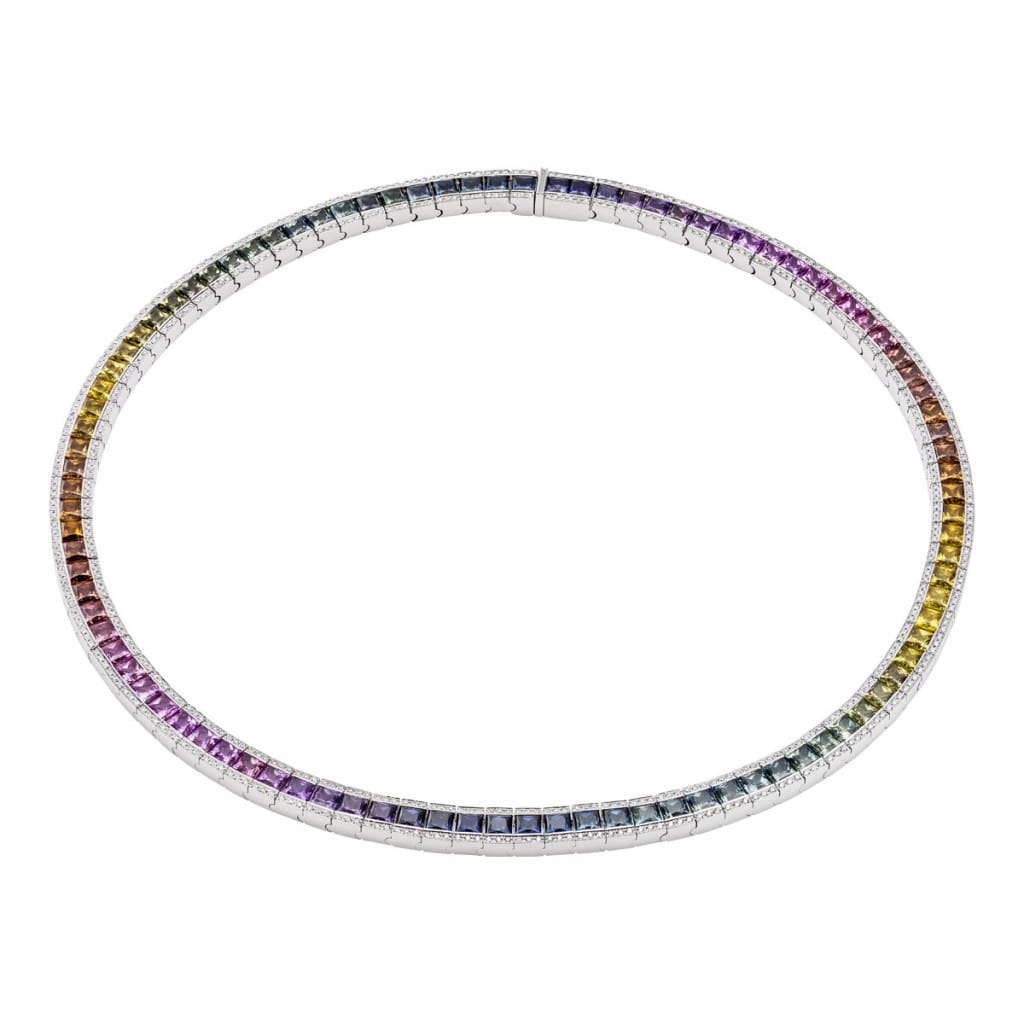 Frieden necklace, Rainbow collection, set with naturally colored sapphires from Madagascar.
Discover Frieden jewelry by Lionel Meylan here
Beautiful and famous
The history of gemmology is full of anecdotes about sapphires, including the amazing story of the “Louis XIV”, a large rhomboid sapphire weighing 135.72 carats. Acquired by Louis XIV in 1669, it was the third gem in the French crown jewels. Until very recently, this sapphire was nicknamed “Ruspoli”, after a prominent Italian noble family. The real “Ruspoli” sapphire, which disappeared in the twists and turns of history, has now been found and the royal origins of this magnificent gem have been traced.
Creation without limits
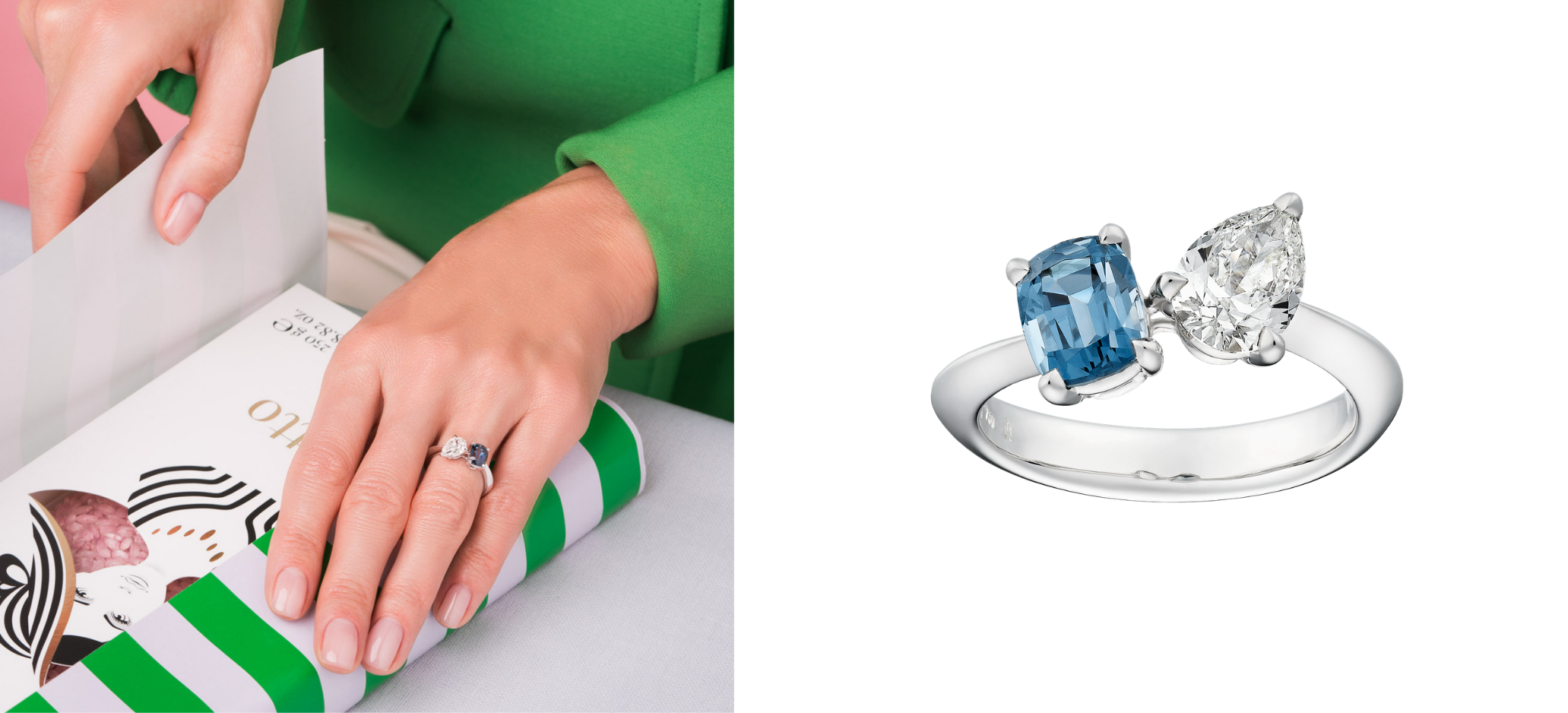
With its rich palette of colors, sapphire is an almost inexhaustible source of inspiration for jewelers. Snow-set sapphires, in particular, allow for all kinds of gradations. Sapphire’s exceptional hardness also lends itself to all kinds of creations. Oval, cushion or pear-shaped, these marvels are set in rings, earrings, bracelets or pendants. Colorful they always are… Precious, infinitely…
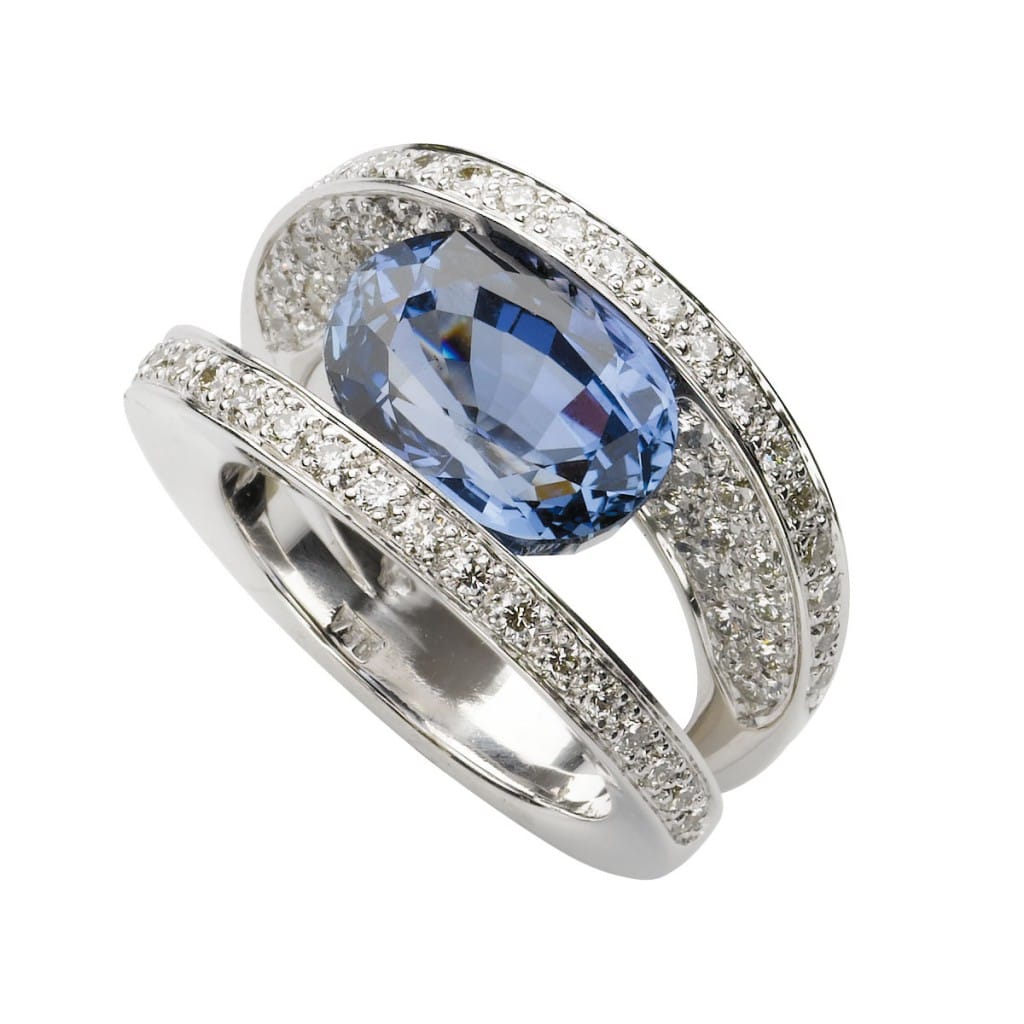
More information on this ring here
Sapphire glossary by Florence Agier

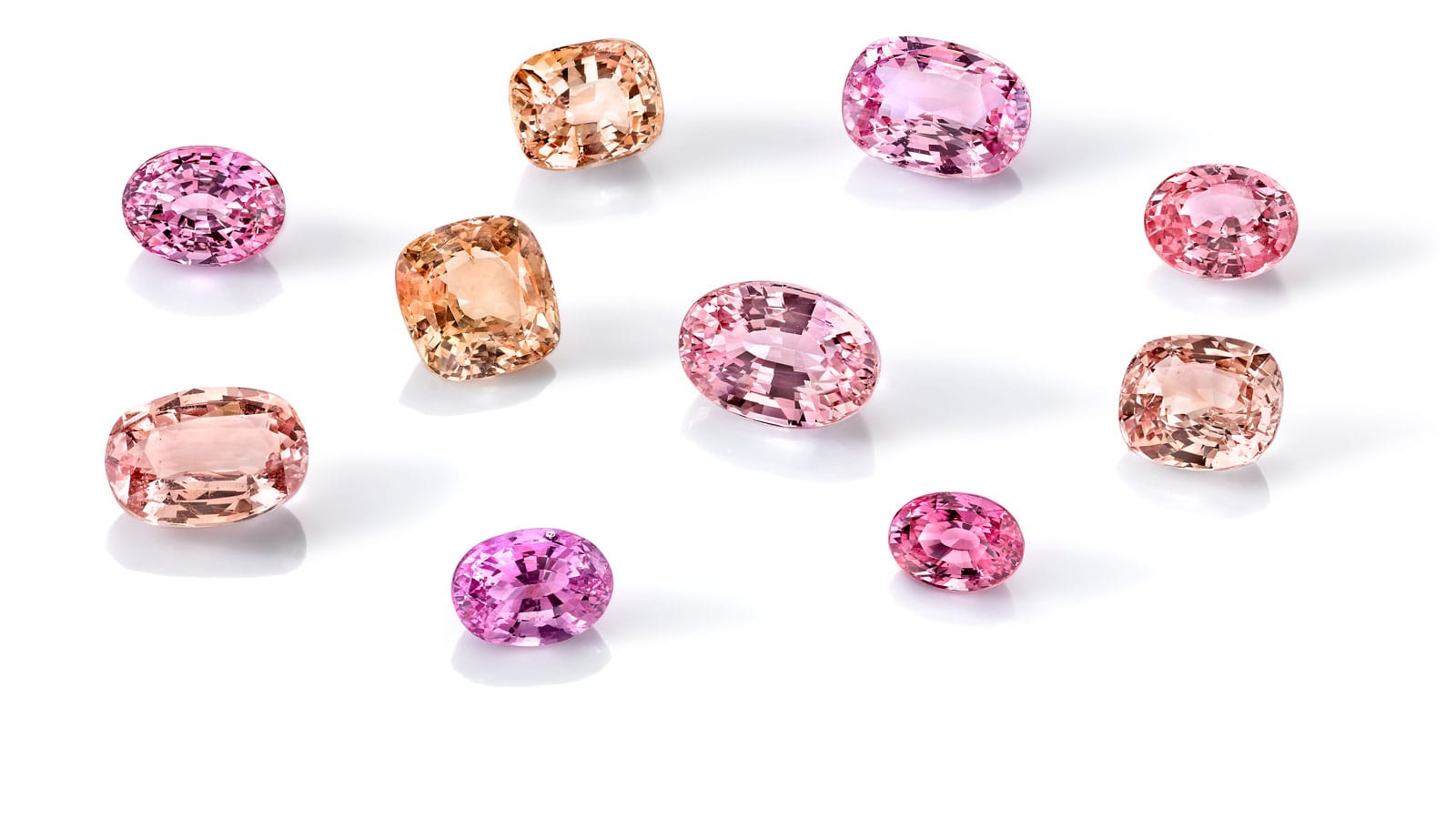
Padparadscha Its salmon-pink color and rarity make Padparadscha the most sought-after sapphire in the world. Originating in Sri Lanka and highly prized by the Japanese, this variety features extraordinary shades of pink and orange.
Hardness Sapphire is a gemstone much appreciated by jewelry designers, not least for its hardness. It has a hardness of 9 on the Mohs scale. Invented in 1812 by the German Friedrich Mohs to measure the hardness of minerals, this scale indicates that only one gemstone is harder than sapphire. It is diamond.
Ruby Among the incredible variety of corundum colors, red occupies a special place. Formed in identical deposits, ruby owes its color to the presence of chromium oxide. The main ruby deposits are found in Burma, Sri Lanka and Thailand.