
Search in progress...
mai 2026
The mysterious power of gemstones
Most stones used in jewelry are mineral in origin, derived from rocks formed below the earth’s crust. They are distinct from gems of organic, animal or plant origin, such as pearls, amber or coral. Contrary to long-held belief, mineral varieties are not formed in the mines from which they are extracted. They originate from fluid magmas that rose from the depths of the Earth millions of years ago and underwent a process of solidification. Most eruptions date back more than 80 million years, the most recent in Tanzania 3 million years ago.
Strictly speaking, there are four gemstones: diamonds, rubies, sapphires and emeralds, which are
renowned for their rarity and purity. Other natural stones classified as “fine” are no less beautiful – it’s simply a matter of taste – and some are even worth more than precious stones.

The power of stones
Since time immemorial, in every culture and epoch, stones have been attributed mysterious powers, on the body or the mind. However, the discipline that harnesses them, lithotherapy – a contraction of the Greek words lithos (stone) and therapeia (cure) – only found its name in the second half of the 20th century. It has enjoyed a resurgence of interest since the 1960s and 1970s, when currents of thought such as the New Age emerged.
Traditionally, stones are associated with birth months. This custom originated in the Old Testament, with Aaron’s 12 stones representing the 12 tribes of Israel. Subsequently, they were associated with the months of birth and the signs of the zodiac. The first official birthstone calendar dates back to 1752. The one we know today, established by the Jewelers of America Association, dates back to 1912. Wearing a birthstone is said to bring good luck, protection and personal development.

Garnet
Garnets are most often red, but can also be green, orange, violet or blue. The latter, extremely rare, were discovered in the 1990s. Fabergé, jeweler to the Russian imperial family, created many
Tanzanite
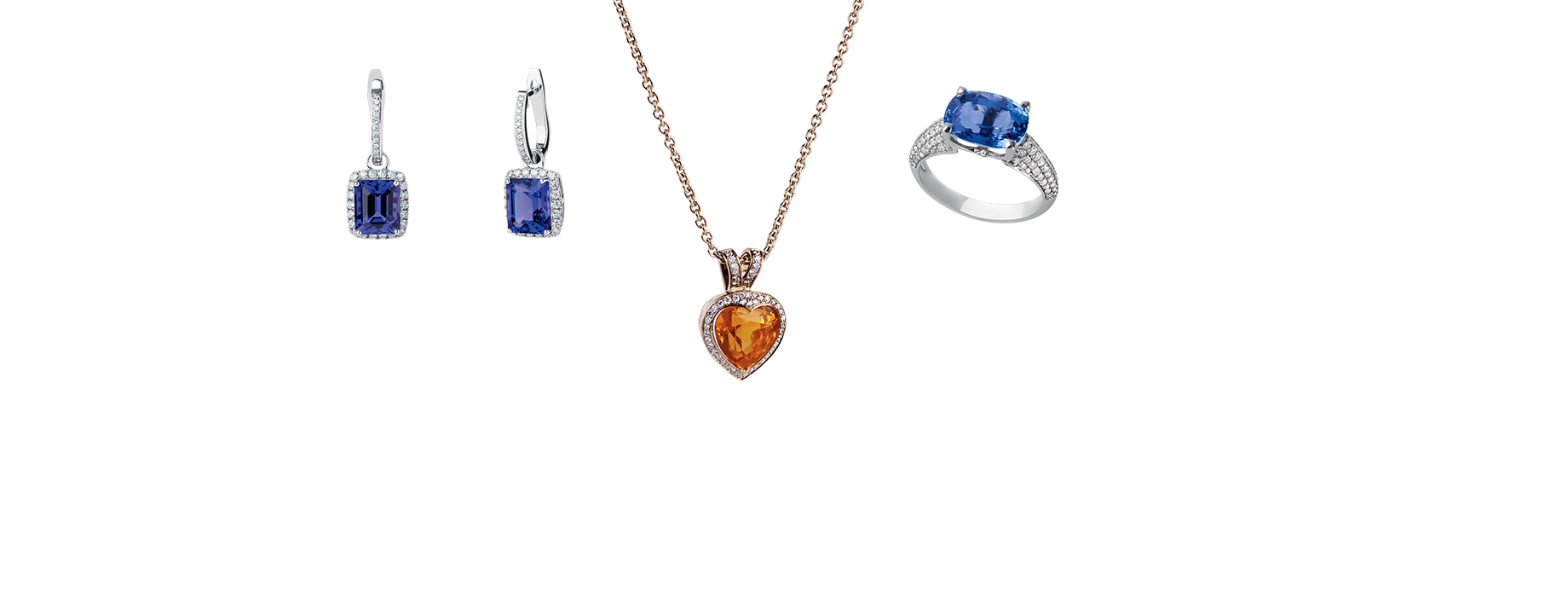
Dubbed the “gem of the 20th century”, tanzanite, which ranges from ultramarine to sapphire blue, was discovered by chance in 1967 by a Maasai at the foot of Kilimanjaro in Tanzania. For the time being, it is found only in this area and in limited quantities – deposits are expected to be exhausted in around twenty years’ time. The most famous tanzanite is the “Queen of Kilimanjaro”. It weighs 242 carats and, together with 803 tsavorites and 913 diamonds, adorns a tiara in the private collection of Michael Scott, Apple’s first CEO.