Search in progress...

mai 2026
The thousand and one facets of gem cutting
Rough gemstones cannot be cannot be set in their original state by jewelers. What does your Why is it necessary to work on a stone to bring out its beauty? If you look at a rough stone, you’ll immediately notice that the light doesn’t get through and the colors aren’t usually as vivid as on a cut stone. The lapidary’s aim is to bring out its beauty by revealing its brilliance and intensity of color. The first step is to sketch the rough stone to determine its shape and decide where the table and breech will be placed once the stone has been cut. This is followed by the formation of facets, which are then polished with various discs or grinding wheels. For corundum (rubies, sapphires), I use a leather polishing wheel. For beryls (emeralds, aquamarines…), I use a pewter disc. The aim is to make the stone shine as brightly as possible, while respecting the angles of the facets.

Does the shape of a rough stone determine which cut it will be cut into? Some forty years ago, in the
gem-producing countries, there was a strong tendency to lose as little material as possible when cutting the stone. Gems were therefore often cut in pear or oval shapes and, once in Europe, jewellers had all the trouble in the world setting them. This required a second lapidary to cut them correctly. Today, we try to choose the type of cut according to the rough stone, but we do it the right way. If the stone is not of the highest quality, cabochon cuts are preferred, to avoid highlighting inclusions. If the stone is beautiful, it’s best to cut it faceted.

Is the color of the rough stone also important? In their raw state, gemstones are not always uniformly colored. Take sapphire, for example: if you want to obtain a large stone, you cut the breech in the most tinted part. This makes the color uniform throughout the stone. For smaller colored gems, we place the color on the table.
Cutting intensifies the color… It’s all about light. To get the best brilliance from lighter stones like aquamarine or tourmaline, we try to cut as many facets as possible. For darker stones like sapphire, garnet or tanzanite, the light diffuses better with larger facets.

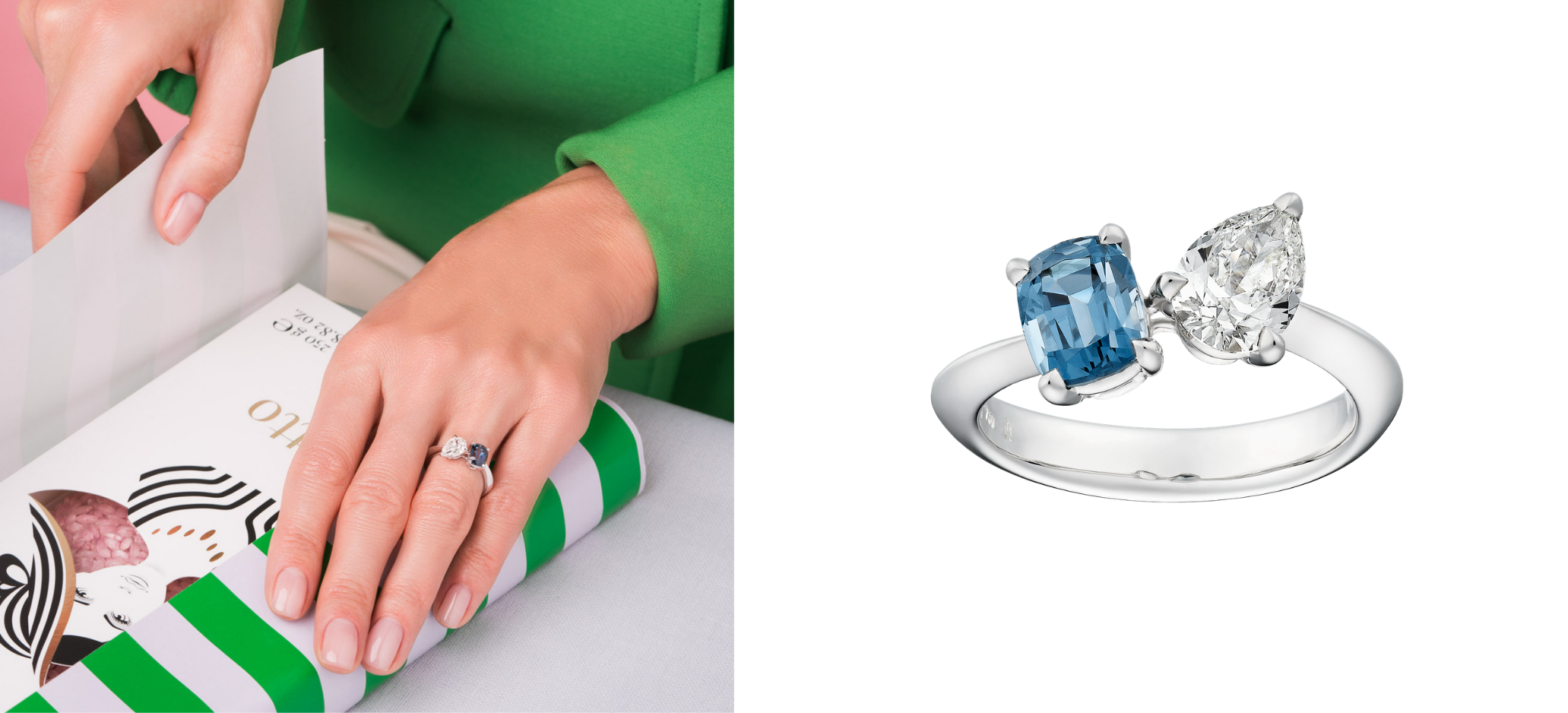
Are all stone sizes possible? There are the classic cuts used by jewellers, such as emerald, brilliant, pear, round, oval… In fact, there are a multitude of varieties to choose from, depending on the stone’s quality, shape and color.

Do you use the same techniques for different types of stone? They all have their own specificities, but colored stones are cut in more or less the same way. Diamonds, on the other hand, are in a class of their own. In fact, it’s a completely different kind of work. Rough diamonds are appraised in the same way as other stones, but their hardness forces us to cut them using other methods. To cut each facet, the lapidary must find the exact angle of crystallization. The speed of cast-iron or steel grinding wheels is three times faster than for colored gemstones. I’d say it’s easier for a diamond cutter to become a lapidary than the other way round. Cutting a rough diamond is a difficult operation that requires great expertise.