Search in progress...
mai 2026
To the rhythm of the clocks
Placed on a piece of furniture, fixed to a wall or in a bell tower, clocks assume a decidedly rather static posture! At least, more so than pocket watches and wristwatches, which are capable of following their owners (very) closely. These peculiarities have earned them their own developments and history, which have also benefited from the whole science of time measurement.
The 13th century: moving away from approximation
Ancient mechanics already knew how to use terrestrial gravitation and weights to drive a mechanism. They were also familiar with gear wheels, ideal for transmitting energy. However, there was a missing link in the precise measurement of time: regulating the rotation speed of the cogs. This was the case with the first modern clocks, probably as early as the end of the 13th century, which became more accurate thanks to the addition of a regulator (escapement). The first type of escapement was a “foliot”. This name literally meant “mad” in Old French, due to the oscillator’s highly agitated movements. At the same time, as early as the 14th century, indoor wall clocks also became widespread. These objects – at the time terribly high-tech! – not only showed off their owners’ wealth and modernity, but also their independence from public, religious or civil time.
The pendulum revolution
In 1656, the Dutch mathematician, astronomer and physicist Christiaan Huygens created a truly extraordinary pendulum clock: its precision went from 15 minutes…
to 10 or 15 seconds a day! This giant leap is due to the isochronism – the regularity – of the pendulum, whose oscillation remains constant. With such accuracy, minute and second hands become relevant and are added to the dials. Moreover, the pendulum device is neither costly nor complex. Existing clocks were quickly “pendulumized”, as the expression of the time went. Research and development continued. The inventions of the balance-spring and the barrel spring – this time without weight – made it possible to move around with the time for travel watches, carriage watches and marine chronometers, synonymous with great discoveries.
International clocks
England, the Black Forest, Austria, France and Switzerland were among the countries where clock manufacturing developed. By the end of the 18th century, the French were mass-producing movements, sometimes sumptuously adorned with sculpted bronze decorations. Fashions followed one another with streamlined skeleton clocks, but also later with decidedly exotic models, featuring numerous palmettes and figures. Appearing as early as 1660, the Comtoise (Morbier) clock was very popular – sturdy and with a wide variety of decorations – with its motorized weight and long pendulum.
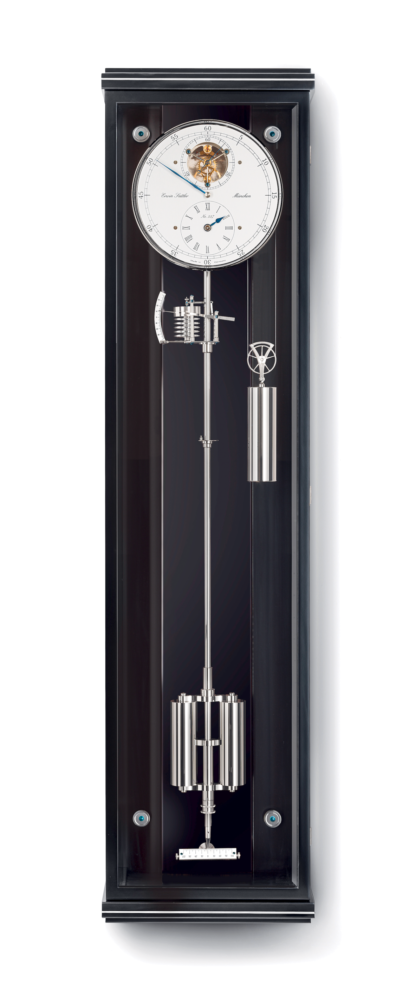
LA CONTEMPORAINE – Erwin Sattler
Sleek design, minimalist refinement, technical precision: halfway between ultra-contemporary design and mechanics that celebrate the watchmaking tradition, the German manufacturer deploys a highly elegant collection of wall clocks and table clocks. It also produces exceptional timepieces such as Rotalis 15, a wall-mounted safe for wristwatches, equipped with winders, as well as measuring instruments such as a thermometer or barometer.
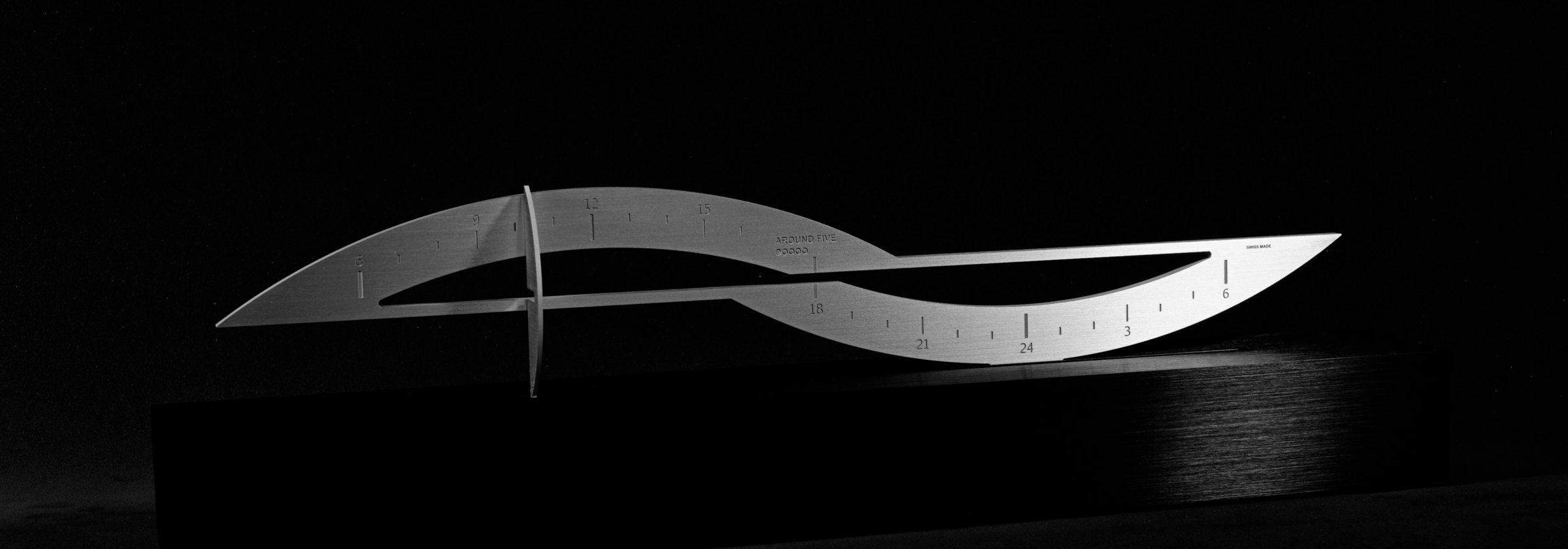
LA POÉTIQUE – Around Five
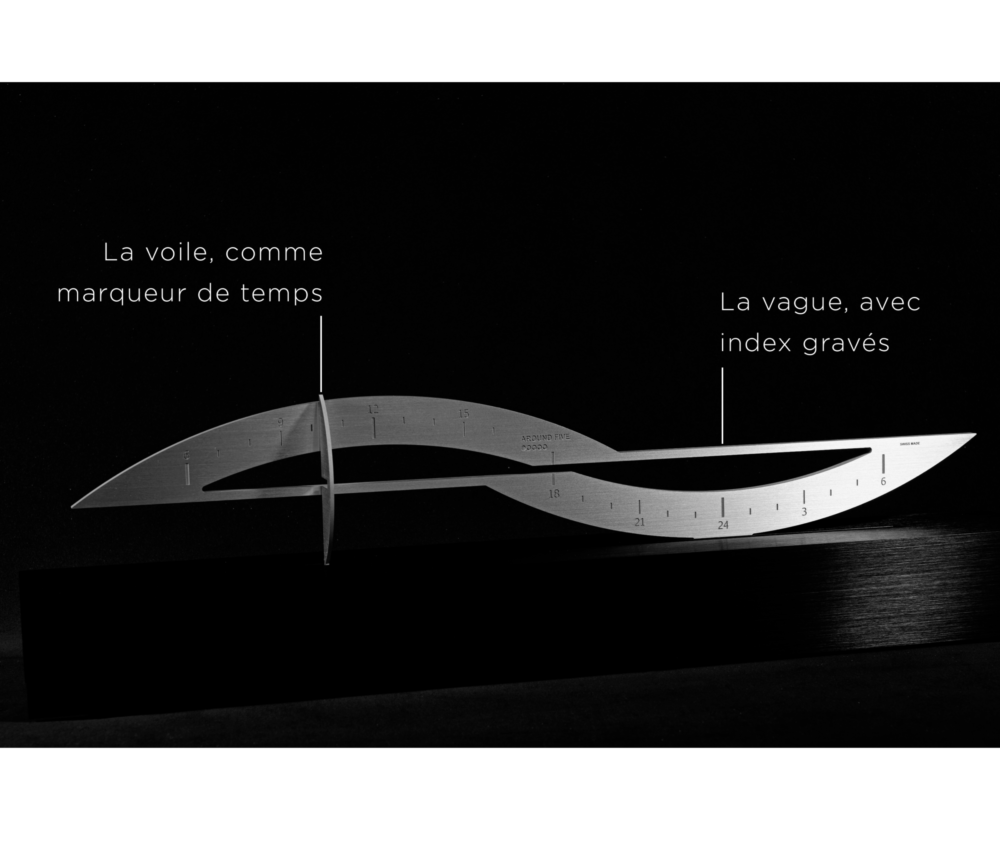
The notion of time passing is intimately linked to the quest for precision. But time is more than that. It is also poetry. The Swiss brand Around Five has seized upon this aerial notion of time with its new-style architectural clocks. On the Odyssée du Soleil clock, the time is read as the sun moves along an architectural structure. The Sculpture du Temps clock, on the other hand, depicts the passing of the hours through the movement of a sail on the timeline. Pure visual pleasure, an invitation to contemplation.
L’ASTUCIEUSE – Atmos by Jaeger-LeCoultre
Ingenious beyond belief, the Atmos winds itself up, and forever. Invented in 1928, its mechanism contains an encapsulated gas mixture that expands or contracts with temperature variations. Imagine a temperature change of just one degree allowing it to operate for 48 hours. The Atmos also stands out for its incredible design, which is wide open to its intriguing cogs.or Around Five, are pretexts for creativity and innovation. Modern clocks have overtaken traditional clock production, which has become increasingly rare. And yet, these witnesses to another era could well once again become objects of covetousness…

Lionel Meylan, a passion for clocks

Trained as a watchmaker and micromechanical engineer, you are now retired. restoring clocks for 40 years. Why do you enjoy it so much?
I love the challenge of bringing a mechanism back to life, understanding how the functions were originally conceived. In the early days, cogs were made by hand, using rudimentary tools such as a file and a divider. Antique clocks have an “organic” feel, and are neither stereotyped nor calibrated. Restored with respect, an antique clock is immortal.
What does the sound of clocks inspire in you?
The clock is a character with a face, its dial, and a voice, its chime. In the 18th and 19th centuries, bell-making was an art, with its complex alloys capable of producing a clear, persistent sound. There are many variations of bell ringing, by bell or timbre, with crystalline or deep tones. Not forgetting the famous cuckoo clock! But the pendulum of clocks also emits a ticking sound, which can beat a second on the most imposing clocks, which is close to the heart rate, with a very soothing effect.