Search in progress...
mai 2026
Traditional bookbinding, a craft in the glory of paper
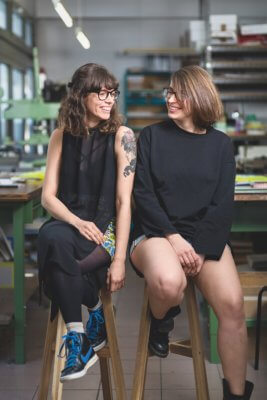
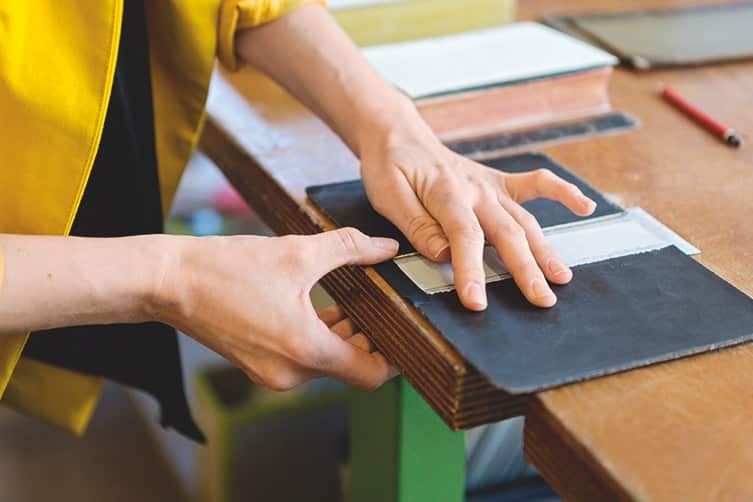
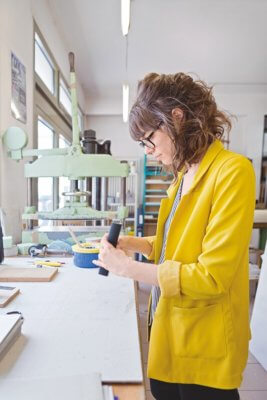
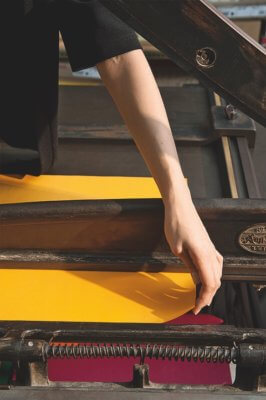
It took guts, desire and passion to dare to embark on this adventure. Bookbinding is a difficult profession,” admits Tessa Wymann, co-founder of dlignes arts graphiques. You choose it because the profession attracts you much more than because of the job prospects.” And yet, despite those who think paper no longer has a say, Tessa and her apprentice, Michelle Roux, perpetuate a lively craft in their Vevey workshop. It’s a craft that relies on technical, meticulous and often creative gestures to give life to magnificent hand-bound works. In our workshop, nothing is automated; 80% of the book is done by hand,” explains Tessa. We have several machines that help us in certain stages, but they work at the speed of our bodies, slowly. The rest is done with scissors, brushes, knives, folders, thread, needles and our hands, of course.”
Technical
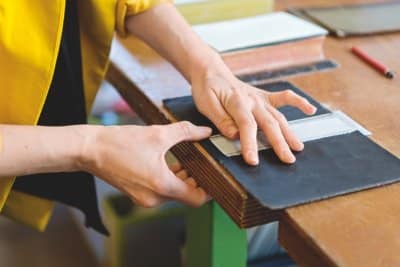
There are a multitude of binding techniques, each requiring different production steps. First, the sheets of paper are glued or sewn with thread, a process that takes between 40 minutes and 1h30, depending on the volume of the book. The making of the cover depends on the customer’s needs. Typically, a 2 to 3mm-thick cardboard sheet is cut with shears before being covered with a variety of materials. Goat, cow or lamb leathers, textiles, paper, wood, Plexiglas, aluminum… dlignes has some 400 different materials for making covers. Once the cover has been made, the final step is to assemble the book. In a classic book, the end pages form the link between the block and the cover. For more contemporary creations, there is a vast array of techniques mastered with “almost obsessive exactitude” by the craftswomen of the dlignes workshop, who make no secret of their desire to continue experimenting. “Being curious is a necessity to revive and evolve our craft!”
www.dlignes.ch
Word by word binding
PLIOIR
This emblematic tool of the bookbinder is carved from a piece of bone to become an extension of the hand for certain operations requiring more hardness than a finger can provide. It can also be made of metal or wood, and more recently of Teflon.
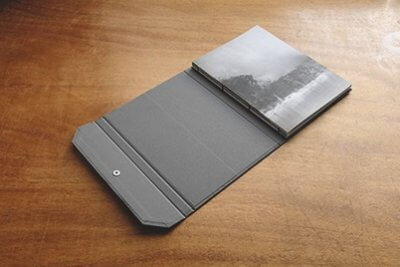
SWISS BINDING
This type of binding features a cover that unfolds completely flat, leaving the book block visible with its seams showing.
MASSICOT
Often confused with the shear, which cuts large sheets of paper one by one, the cutter is a machine designed to cut whole blocks of paper using a transverse blade. It can be electric, hydraulic or manual.
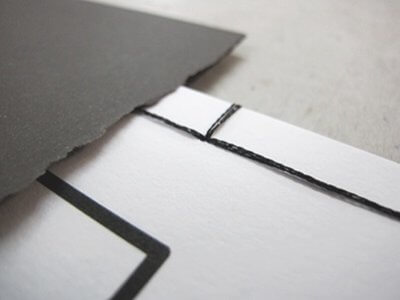
JAPANESE SEWING
The book is assembled entirely without glue. The leaves are pre-punched with a punch, and the book is then sewn with exposed thread.
TRANCHEFILE
This is a small embroidered decoration found at the head and foot of hardback books. Its function is to hide small flaws in the block and to conceal an unsightly part of the cover.
In figures
2011 – The year dlignes arts graphiques Sàrl, Vevey, was founded, following the takeover of Mr. Boulenaz’s bookbinding business, a family enterprise that had been in operation for almost a century.
50 – The average number of operations required to create a hardback book.
2 – The number of tons of paper processed each year.
400 – The different materials available in the workshop for all types of creations.
4 – The number of years of apprenticeship to become a bookbinder, in dual training, with courses at ERACOM.