Search in progress...
mai 2026
Under the dazzled gaze of the gemmologist
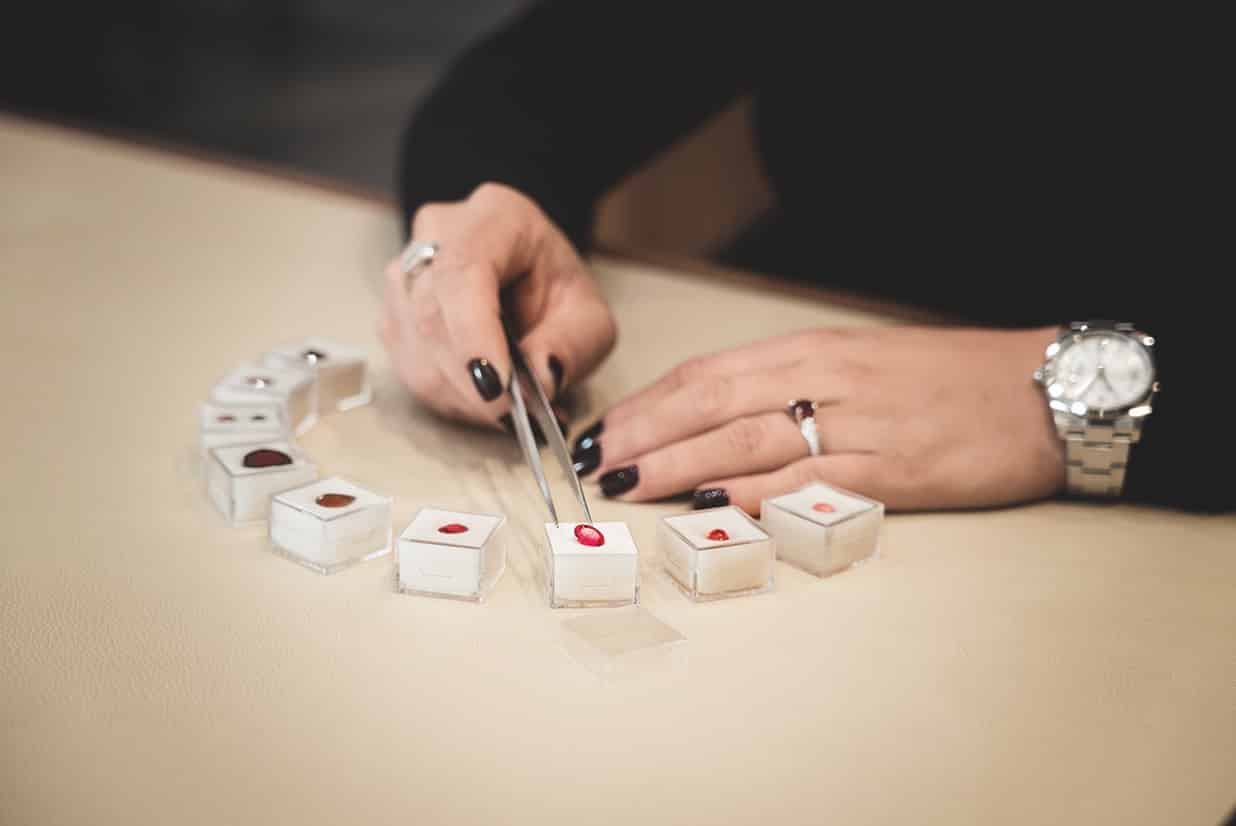
Sometimes almost nothing is enough. A tiny detail. A singular light. A stronger color, an emotion perhaps. Nothing, really almost nothing, to choose one gemstone over another. Only a trained eye can detect the quality and value of a stone. While passion often presides over the profession of gemmologist, a perfect mastery of the history and properties of these natural gems is always a necessary prerequisite. And yet, what a vast world gems represent!
Choosing a stone, a science
The gemmologist’s profession has many facets, among which the choice of precious or fine stones is of great importance. And while emotion rarely fails to play a part in this selection, the gemmologist relies above all on concrete technical and scientific elements such as color, purity, cut and provenance. In other words, the intrinsic quality of a gem. The color must be intense and limpid. The cut is also appreciated for its shape and symmetry. Certain shapes are recommended to enhance the quality of the stones. A shape with less depth will sublimate an Emerald, while a Tanzanite or a Zircon will require, on the contrary, more depth to reveal all their attractions. Purity is also meticulously examined, with tolerance levels varying according to gem variety.

The gem identity card
Calculating caratage is also a demanding task. Imperceptible to the naked eye, tiny differences can lead to extraordinary price variations, particularly for diamonds. Between 0.98 carat and 1.1 carat, the balance is fine, but the value can quickly soar. The same applies to the provenance of stones whose origin influences prices, such as Paraiba tourmaline or Colombian emeralds, reputed to be the most beautiful in the world. In such cases, an international certificate may be required to attest the weight, shape, color and origin of a stone, as well as any treatments it may have undergone. These certificates are not mandatory, but can be issued by specialized companies at the gemologist’s request. In the gem world, it’s like an identity card. Accurate and informative, but always shrouded in an aura of mystery.
A unique stone
for an exclusive jewel
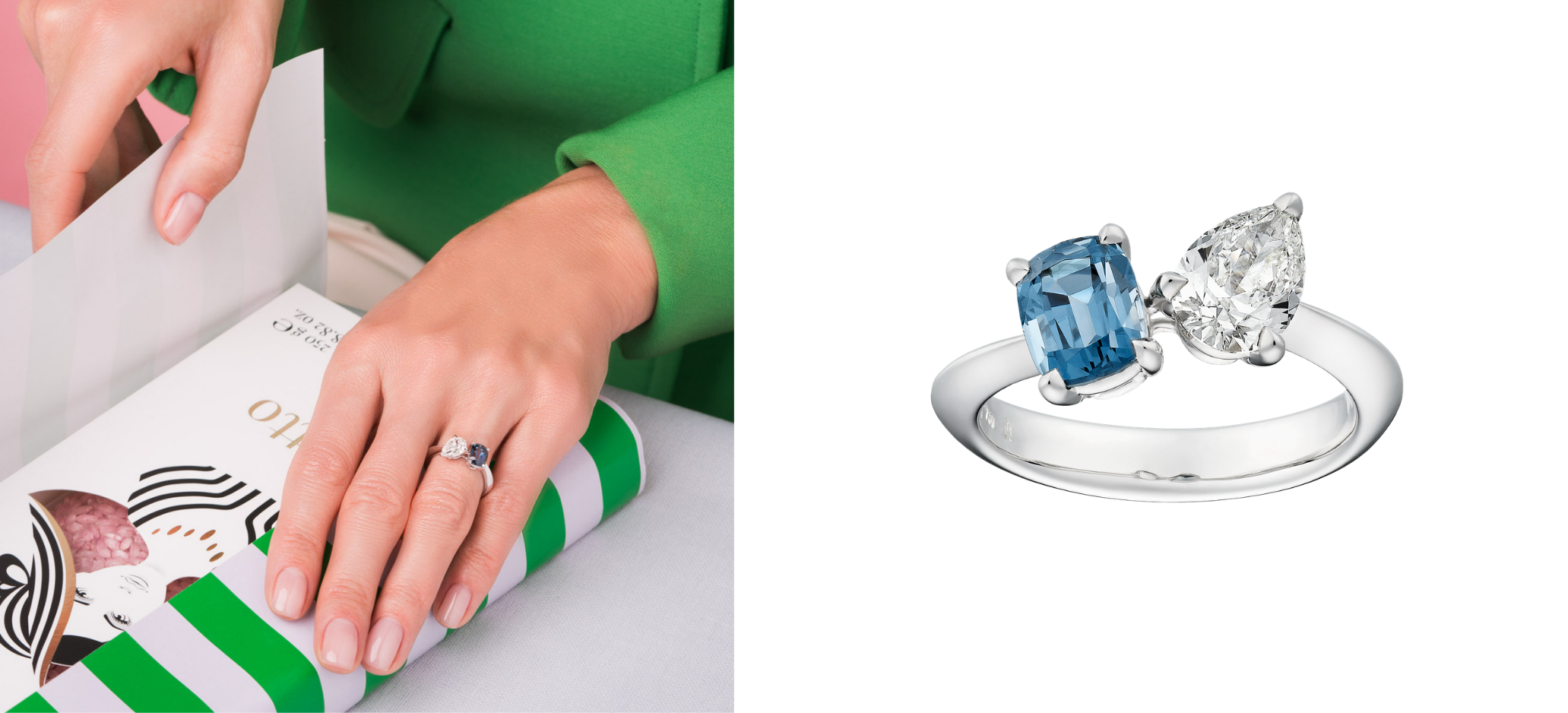
“Transforming a piece of jewelry or creating from scratch the jewel of your dreams, imagining its contours, defining its shape, choosing a precious stone, perhaps preferring a gemstone… An idea, a special desire, a crush on a gem are often the starting point of the adventure. Under the expert eye of gemmologist Florence Agier, the project takes shape as a result of exchanges and discussions, giving life to unique creations that convey immense emotion.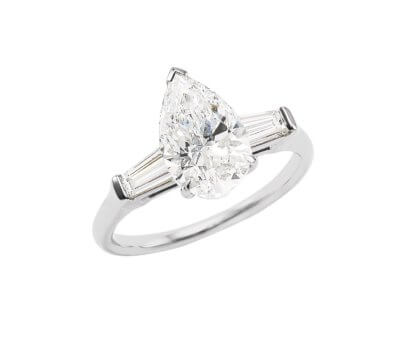 The sparkling beauty of this 2.53-carat pear-cut diamond set in white gold is enhanced by two trapeze diamonds.
In figures
58 – The number of brilliant-cut facets.
4 – The 4Cs – Cut, Color, Clarity, Carat – are the four criteria that determine the value of a diamond.
0.2 – In grams, this is the equivalent weight of a carat. It’s also the weight of a carob seed, used as a unit of measurement in ancient times.
4 – The number of precious stones – diamonds, rubies, emeralds and sapphires – officially listed by the Confédération Internationale de Bijouterie, Joaillerie et Orfèvrerie.
1967 – The year of the discovery of Tanzanite, one of the last gemstones to be discovered in gemology and now on the verge of extinction.